

Welsh lovespoons are more than just beautiful pieces of folk art, they are tales etched into wood. Through time, each symbol, line, and flourish has accumulated layers of significance to become a potent symbol of love, hope, and endurance.
And when you’re holding a Welsh lovespoon, you’re not just looking at a fine piece of carved wood. You’re reading a private language that generations of lovers have whispered in. Each heart, each chain, each Celtic knot is a story that extends far beyond what’s visible to the eye.
Why Symbolism Matters
Before text messages and love letters, Welsh carvers used a sophisticated symbolic language to communicate their intimate emotions. Then it became the symbol of Love.
The meaning of the symbolism in welsh lovespoons was a helpful way for young men to express their feelings and intentions without speaking a word, which sows a great deal about the tradition and history of Welsh Lovespoons.
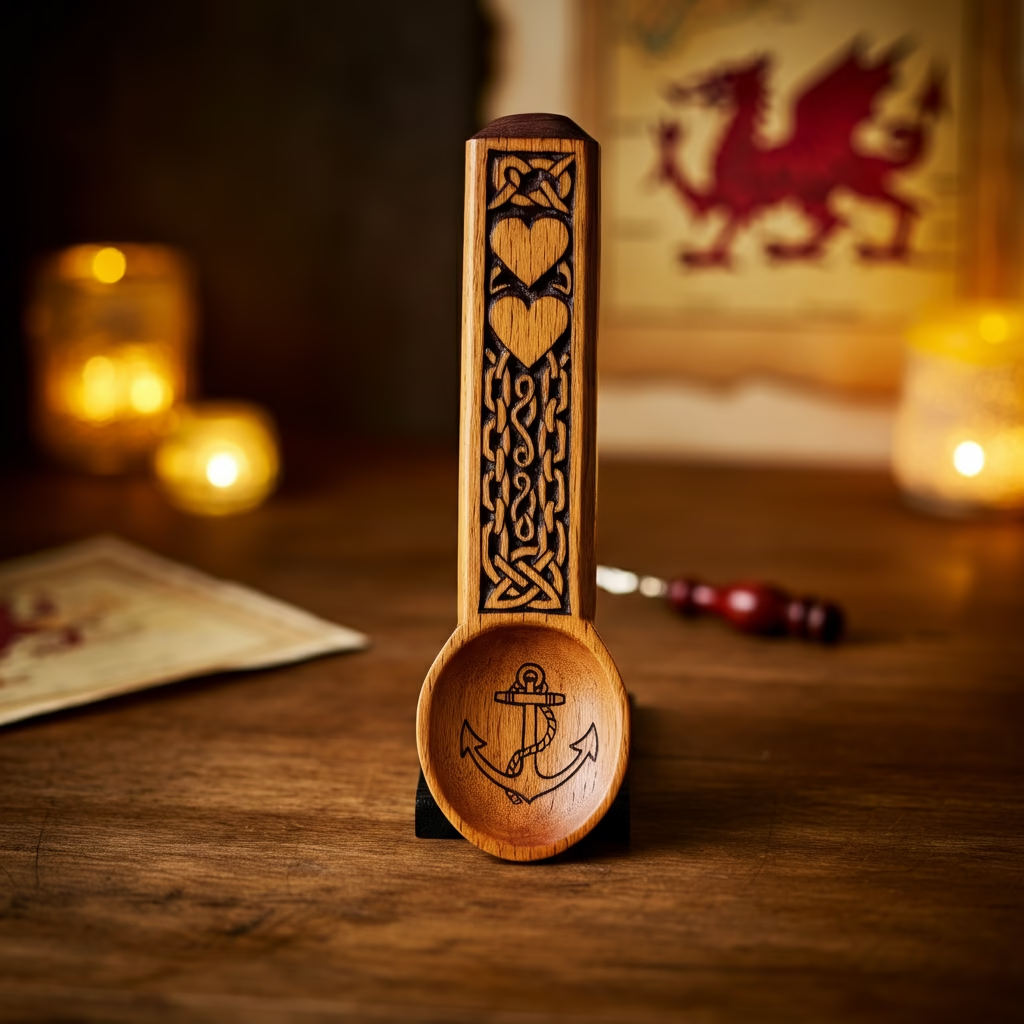
The tradition has its roots in practicality. In a lot of Welsh villages courting couples had few chances for private conversation. A lovespoon could say things that might take hours to say in words and it could say them with an artistry that would be something to cherish for generations.
There is a depth to lovespoon symbolism that makes it so beautiful. One carving might symbolize a fresh romantic passion as well as a shared future. This was a level of nuance that rendered lovespoons ideal courtship gifts, as would-be lovers could be romantic without upsetting the social order.
Decoding the Symbols of the Traditional Welsh Lovespoon
Welsh lovespoons are highly decorated with a range of symbols, all of which mean something different. Each of these symbols represents a particular meaning which can be found accompanied with an example image in the gallery below. While the most common symbols are shown, lovespoons are not limited to these symbols and can be carved with any symbol that is desired. An example of which may be of a musical note or instrument, which may simply indicate the recipient or owners affinity towards music.

Anchor
Settled love, or signifies sailor origins.

Ball cage
Love held safe, or used to show a number of children.

Bell
Signifies a wedding or anniversary celebration.

Birds
Love birds or flying away together. If a single bird e.g. dove, represents peace.

Chain
Two people together forever or linked together.

Cross
Faith in Christ or relating to a wedding.

Diamond
Relating to wealth, prosperity or good fortune.

Double bowl
Symbolises togetherness or the phrase ‘Let us be together’.

Dragon
Strength, or often used to represent the Welsh Dragon.

Flowers
Symbolises a loving relationship. In the case of a daffodil, used as a symbol of Wales.

Harp
Angelic themes or shows an affinity towards music. A symbol of Wales.
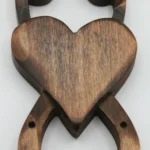
Heart
Symbolises steadfast love or the phrase ‘I love you’.

Horseshoe
Often used to symbolise luck, and wishing good luck to their recipient.

Knot
Two souls intertwined, tied together, or an eternal love.
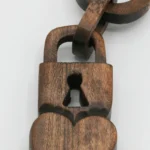
Lock
Symbolises security or two souls locked together with the phrase ‘I shall look after you’.

Numbers
Used to specify milestone celebrations, e.g. birthday or anniversary.

Shield
A symbol representing protection, or the phrase ‘I will protect you’.

Stork
Celebration of a new-born baby or pregnancy.

Twisted stem
Symbolises togetherness and being united in eternal love.

Wheel
Signifies someone who will work for their significant other.
People now give lovespoons for weddings, anniversaries, birthdays, new babies, Christmas, and Valentine’s Day. They’ve become simple, handcrafted welsh gifts. Most folks think of them as part of traditional folk art rather than something formal.
Regional Symbols That Speak Beyond Language
Distinct regions of Wales developed their symbolic traditions and this has resulted in intriguing Welsh lovespoon carving symbols differences. These variations were local expressions, reflecting local practices, materials at hand and cultural factors that dictated how a community felt about romance.
The Costal Tradition
In coastal regions the peasant symbols were replaced by marine symbols.
- Anchors: Anchors signified permanence and a safe home.
- Ship: Ship stood for the voyager through the journey of life that a husband and wife share.
These lovespoons from the coast have frequently had carved rope patterns, which evoked the rigging and tackle of seafaring communities.
The symbols imprinted were representative of mountain living and lifestyle.
- Wheel: Wheels represent the effort and shared labor.
- Keys and keyholes: Keys and keyholes with the security of home and hearth.
These sizeable farming symbols embodied the spirit of cooperation and common cause so necessary in rural life.
The development of these local versions was often a multi-generational process in which carvers fine-tuned their styles.
This gradual accumulation of skills and symbolic vocabulary is clear evidence of why knowledge of the ways in which lovespoons are produced is a necessary context to the interpretation of the symbolic wealth that accretes around them.
The Northern Tradition
In North Wales a geometric and stylized treatment of natural motifs became a speciality.
Northern carvers used to include bells in their design, which all of them represented a wedding, and good news. The clear and accurate delineation demanded by these geometrical emblems betokens the systematic method of workmanship which characterizes north Welsh art.
The Southern Tradition
The Lovespoons of South Wales featured more naturalistic interpretations and flowing patterns.
Carvers from this region frequently incorporated vine patterns, flower motifs, and organic shapes, honouring elements that were found in the natural environment. These symbols linked romantic love to the flow of nature and the prospect of growth and renewal.
Interpreting Complex Designs
Learning how to interpret lovespoon carvings requires understanding that most lovespoons combine multiple symbols to tell complete stories. A single lovespoon might include hearts for love, chains for commitment, anchors for stability, and Celtic knots for eternity, creating a comprehensive romantic message.
The arrangement of symbols also carried meaning. Central placement indicated primary importance, while supporting symbols around the edges provided context and additional layers of meaning. Some carvers developed personal symbolic vocabularies, creating unique combinations that became their artistic signatures.
Consider a lovespoon featuring a large central heart connected to smaller hearts by a carved chain, surrounded by Celtic knotwork, and anchored by a small wheel at the base. This design would tell a story of deep love (central heart) connecting to family love (smaller hearts) through unbreakable commitment (chain), blessed with eternal duration (Celtic knots), and grounded in shared work and partnership (wheel).
How Modern Carvers Honor Tradition?
Today’s lovespoon carvers, of course, respect traditional symbolism but also interpret it for modern relationships and values. Contemporary lovespoons now feature traditional symbols and are also designed to include contemporary symbols, both based on existing design traditions and ones taking on new meaning in popular culture.
Modern wood carvers may feature shared interests, career goals, or personal accomplishments in their symbols.
A lovespoon designed to represent a couple who met while traveling might include traditional hearts flanked by compass roses or world maps. For example, musicians might be presented with a lovespoon containing musical notes along with symbols of love that are more common.
This transformation shows lovespoon tradition as a tradition of any live art. The craft continues instead as new symbolic language to draw from while it never becomes locked in history.
Famous Symbolic Lovespoons
Some of the finest examples of Welsh lovespoon carving are available for purchase and in museum stores etc. Indeed, these examples represent some of the highest artistic standards ever achieved in the lovespoon genre.
The “Hiraeth” lovespoon from the 18th century includes a very complicated array of symbols from the story of a sailor yearning for home and love. Comprised of anchors, ships, hearts and chains linked together with flowing Celtic knotwork, symbolically conveying either unity or a message that is unique to the wearer.
Another well-known design, known as the “Promise Keeper”, has a singular design element: a hand that looks like it has been carved attempting to reach out of the wooden surface. This innovative symbol represented the carver’s promise to always reach out to his beloved, no matter what barriers might separate them.
Preserving the Language of Love
Maintaining the symbolic meaning behind the Welsh lovespoons is essential to the survival of their cultural significance. For everyone who knows, interprets, and shares the meaning of a sculpture, a piece of tradition stays alive. These carved messages keep traveling forward through time. They keep touching our hearts long after they were first created.
When you next stumble across a Welsh lovespoon, read the symbolic tale it tells. You’ll find that these wood treasures are about much more than what meets the eye. They will give you a glimpse into the hearts and souls of people who thought that love was worthy of the most beautiful voice it could possess.
Leave a Reply